The eMAMA project came to an end on 31 August 2026. Here is what it was for, and what is left behind.
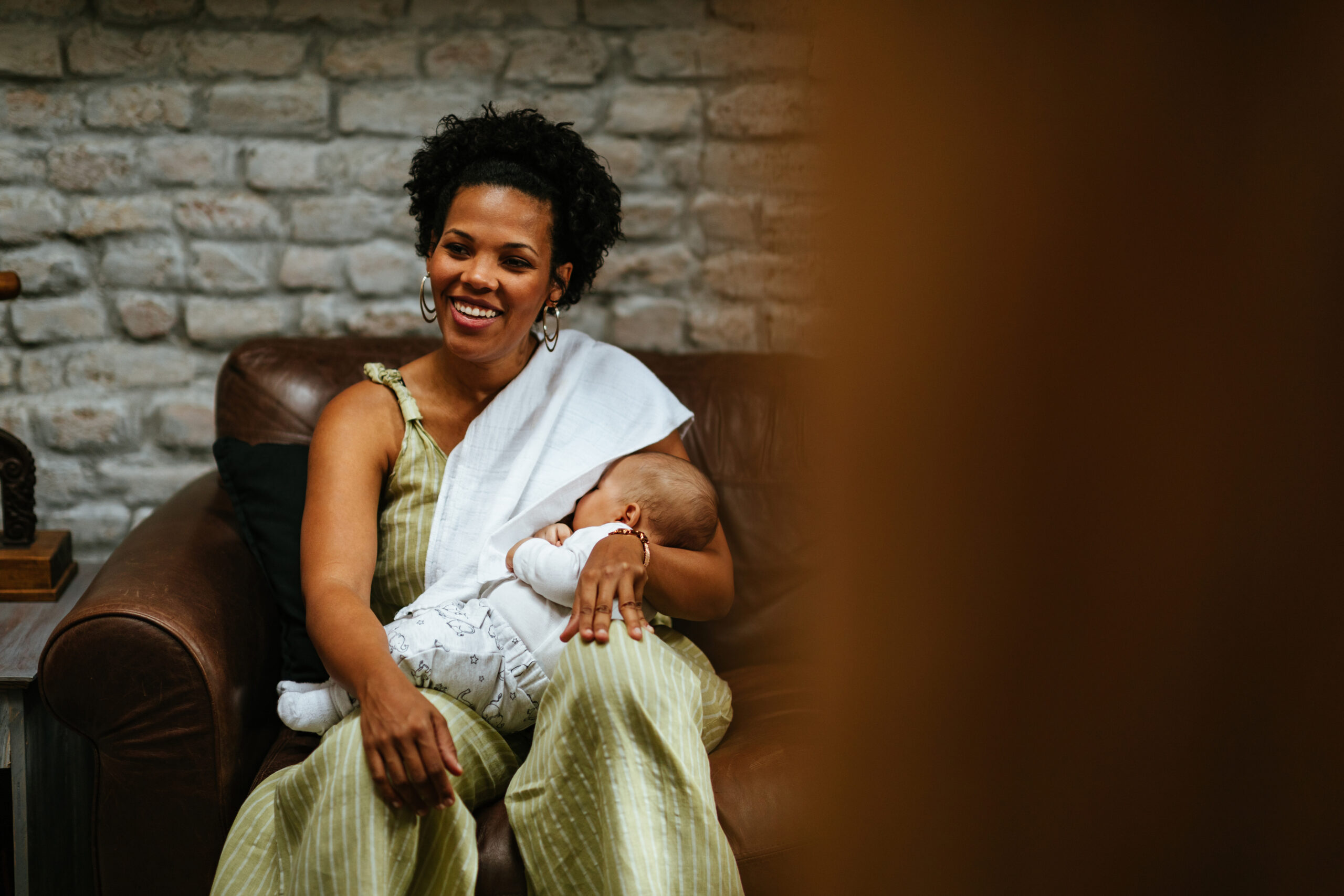
There is a moment in almost every maternity clinic in the world that passes without anyone noticing it. A mother comes in for the six-week check. Someone weighs the baby, looks at the feeding, listens to the chest, writes in the card, and calls the next patient. The baby is fine. Nobody has asked the woman holding the baby how she is, and if somebody did ask, and she answered honestly, there is a fair chance that nobody in the building would know what to do next.
This is not a story about people who do not care. It is a story about a gap in training. Maternal health services are built around pregnancy and the infant, and mental health services, where they exist at all, are built around severe illness in adults who come looking for help on their own. A woman who has just given birth and is frightened, sleepless, unable to eat, or convinced that she is failing at something everyone else seems to manage, does not fit neatly into either. She tends to fall through the middle, quietly, often while being seen regularly by skilled professionals who were never taught this particular thing.
eMAMA was a three-year attempt to close a piece of that gap in Malawi, Namibia and Zambia. 🌍
What we actually did
The short version is that a consortium of universities built a postgraduate training programme in perinatal mental health, and then taught it.
The longer version is that eight partner universities, together with Turku University of Applied Sciences as coordinator, spent the first part of the project working out what such a programme should even contain in these three countries, which is not the same answer as it would be in Finland. Then the modules were written, reviewed by every partner, sent back, rewritten, validated, and finally delivered online through Moodle to health professionals who were working full time while they studied. Alongside the teaching, the project produced an implementation handbook so that the next institution to run the programme does not have to rediscover everything from scratch, and a mobile application that brings some of the material out of the university and into the hands of mothers, health workers and family members who will never enrol on a postgraduate course.
By the time the pilot cohort finished, 207 certificates had been issued.
The number is not the point, but it is a good place to start 💙
Two hundred and seven is a modest figure by the standards of European funding statistics, and an enormous one if you think about what each certificate represents. These were midwives, nurses, clinical officers, psychologists and university lecturers who took on demanding postgraduate study on top of a working week that was already more than full. They studied in the evenings and at weekends, around night shifts and staff shortages and family obligations, sometimes over connections that dropped in the middle of a live session and occasionally through power cuts that took the whole thing down. Some disappeared for weeks and came back. The great majority finished.
What they take back into their clinics and lecture halls is not only knowledge but permission: a professional language for something they had all seen many times and had no framework for naming. Several of them now teach the subject themselves, which is the part that matters most in the long run.
Livingstone 🇿🇲
The project closed its public chapter at the final conference, Pathway to Impact: Advancing Maternal Mental Health Capacity in Africa, held in Livingstone on 4–5 May 2026 and streamed on Zoom for everyone who could not travel. Health professionals, educators, researchers and policymakers came together for two days of presentations, submitted abstracts and the kind of corridor conversation that no online meeting has ever managed to reproduce.
For many of us it was also the first time we were all in the same room. Three years of Teams windows, time zones and email threads, and then suddenly people who had co-written a module were shaking hands and finding out what each other sound like when they laugh.
For colleagues in higher education 🎓
A few honest notes for anyone running or planning a capacity-building project of this kind.
Coordinating nine institutions across several countries means nine academic calendars, nine sets of approval procedures and nine different working assumptions about what counts as urgent. Deadlines moved. Budgets were reallocated between partners through formal amendments. Deliverables that looked simple at the kick-off meeting turned out to depend on committees that meet twice a year. None of this is unusual, and the project still delivered what it promised, largely because specific individuals in each institution decided the work mattered and pushed it through their own systems by hand. Consortium agreements get you a consortium. Named people get you a programme, and if one of them leaves, you feel it immediately.
The second lesson concerns sustainability, a word that appears in every application and means very little until the funding actually stops. What survives here is not a platform someone has to pay for but the things the partner universities now own: validated curriculum, teaching staff who have delivered it once, the handbook, and the app. Whether the programme runs again depends on decisions inside those institutions rather than on anything Turku UAS can control, which is uncomfortable, and also exactly how it should be.
The evaluation data from the training is not yet analysed or published. Early indications are encouraging, and we would rather wait and report it properly than put a percentage in a blog post.
After the end date
Erasmus+ projects have hard closing dates. The need they respond to does not, and 31 August was simply the day the reporting obligations changed.
Somewhere in the coming years, in a clinic in Blantyre or Windhoek or Lusaka, a woman with a six-week-old baby is going to be asked how she is really doing, by someone who knows why the question matters and what to do with the answer. Nobody will write that down as a project indicator. It is still the whole point.
To the partner universities, to the teaching staff, to the 207, and to everyone who kept this moving through three complicated years: thank you. It has been a genuine privilege to coordinate.
No responses yet